
Spotting Early Learning Challenges in Young Children
Your four-year-old sits down with a crayon and a piece of paper. She wants to write the number five for a friend’s birthday card. She tries again and again, muttering, “No, that’s not right…” On attempt number six, she throws the crayon down in frustration: “I just can’t do this! Fives are too hard!”
If this sounds familiar, you’re not alone. Every parent has seen their child struggle with a new skill and every parent worries: Is this just a phase, or is something more going on?
The good news is that noticing early struggles can make a real difference. Research and clinical experience show that supporting children early can help them build confidence, skills, and a love of learning.
What Are Learning Challenges?
Learning challenges (sometimes called learning disorders) happen when a child has persistent difficulty with a specific skill, like reading, writing, or math. It’s not about intelligence, many kids with learning challenges are just as smart as their peers. The difference is that their brains process certain types of information in a way that makes some tasks harder to master.
For example, a child may excel in social skills and creative activities but struggle to recognize letters or remember numbers. In these cases, a learning disorder is present if there is a clear gap between what is developmentally expected and what the child is able to do.
These challenges often become clearer once children start school, but some signs can show up even in preschool. Watching for them early can help you get support before frustration takes over. Early observation and intervention can make a significant difference in a child’s experience at school and at home.
Early Signs to Look For
While learning challenges can look different in each child, research and clinical experience suggest several areas parents can watch closely.
Fine Motor Skills
Fine motor skills involve the small muscles in the hands and fingers. They are critical for tasks like writing, cutting with scissors, using utensils, and manipulating small objects.
Parents might notice the following signs of fine motor difficulties:
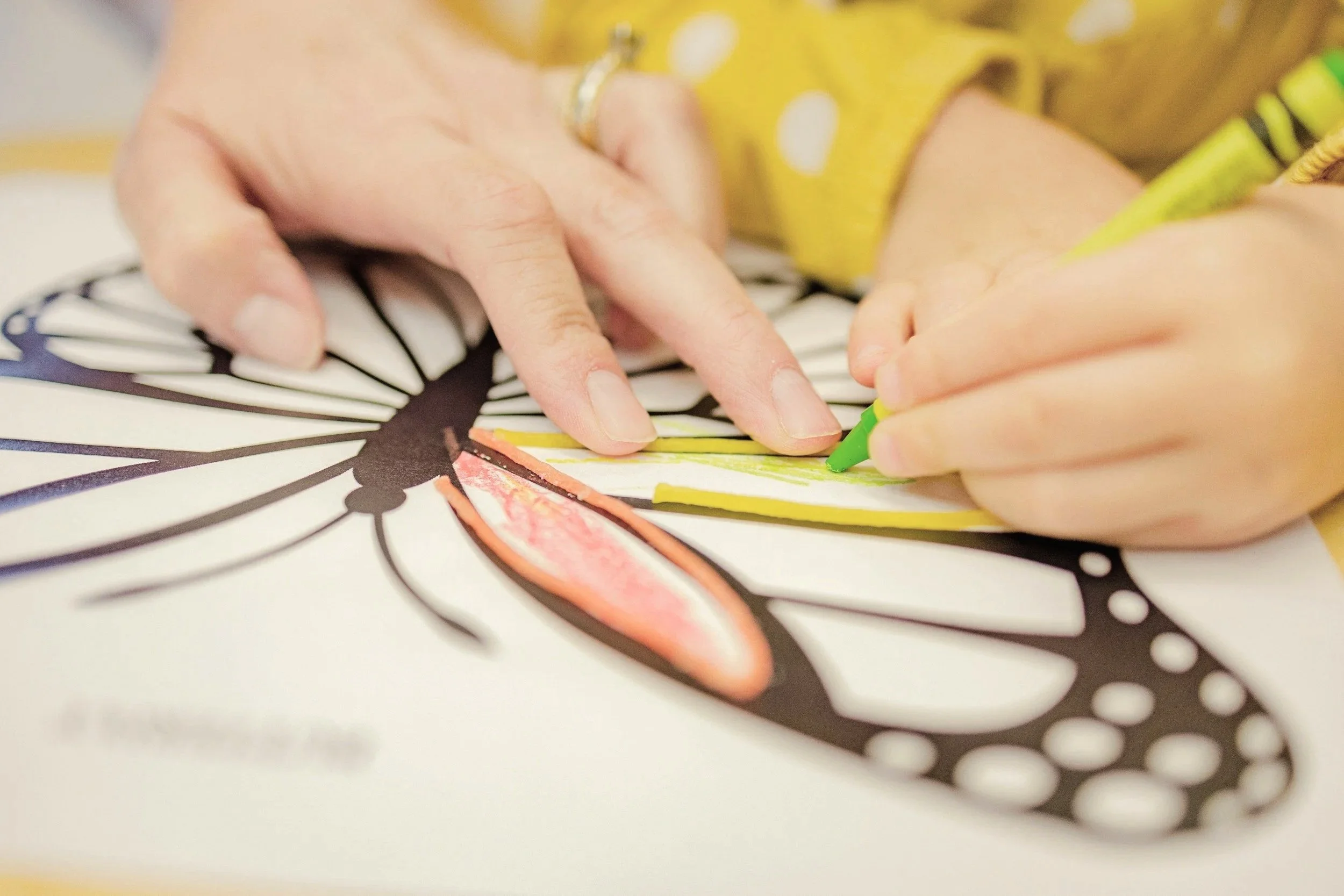
Trouble holding a crayon, pencil, or fork correctly
Avoiding drawing, coloring, or building with blocks because it feels physically hard
Difficulty with everyday tasks such as buttoning shirts or turning pages in a book
Occupational therapists can help children strengthen these skills, improve hand-eye coordination, and develop strategies that make classroom tasks less frustrating. Early support in fine motor skills can prevent struggles from becoming barriers to learning later on.
Language Skills
Language is the foundation for reading, writing, and social interaction. Challenges in this area can appear in two ways:
Receptive language issues occur when a child has trouble understanding spoken words or instructions.
You ask your child to “pick up the red block and put it on the table,” but they only move the block halfway or do something completely different.
In this case, your child’s brain is having difficulty processing or remembering the words and instructions, not that they are being “naughty” or uncooperative.
Expressive language issues happen when a child struggles to use words to express ideas, form sentences, or tell stories.
Your child wants to tell you a story about a trip to the park but can only manage single words like “park…slide…fun,” instead of forming full sentences.
Children with expressive language challenges often get frustrated because they know what they want to say but can’t get it out clearly.
Tip for Parents:
For receptive language, repeat instructions in smaller steps and use visual cues like pointing or showing objects.
For expressive language, model full sentences when talking to your child and give them time to respond without rushing.
Signs that your child may need support include:
Difficulty following multi-step directions
Limited vocabulary for their age
Trouble expressing thoughts clearly
Early intervention from a speech-language pathologist can help children develop communication skills in a fun and supportive way. Strengthening language abilities early also helps prevent frustration and supports confidence in school.
It is also important to note that delayed language, particularly when paired with social challenges, can sometimes be an early sign of autism. Early evaluation and intervention can be extremely beneficial for children on the autism spectrum.
Early Reading Skills
Reading is built on several early skills, even before children can read independently. These include:
Recognizing letters and letter sounds
Understanding rhymes and word patterns
Matching sounds to words
If your child struggles with rhyming, seems uninterested in letters, or avoids activities like reading together, it may be a sign that they could benefit from extra support. Targeted early interventions, such as phonemic awareness games or structured literacy activities, can set the stage for stronger reading skills later.
Early Math Skills
Early math is more than counting. It includes:
Recognizing numbers and their values
Understanding order and quantity
Learning basic addition and subtraction concepts
Some children may struggle with counting objects or sequencing numbers. They may avoid number-based activities or show frustration when asked to complete simple math tasks. If these difficulties persist, early intervention from an educator or specialist can help children develop foundational skills before math challenges compound.
Behavioral Clues
Behavior often reflects underlying learning challenges. Children might:
Get frustrated or upset during drawing, puzzles, or other skill-based activities
Avoid certain tasks or refuse to try new activities
Show meltdowns over simple mistakes
These reactions often indicate that the skill itself is difficult, rather than a lack of effort or interest. Observing patterns in behavior can help parents and educators determine where extra support is needed.
Attention and Focus
Some children may display high energy, distractibility, or impulsivity. Signs to watch for include:
Difficulty staying seated or focusing on tasks
Trouble following simple instructions
Frequent movement or restlessness during calm activities
These signs may indicate challenges with attention or executive function skills. While ADHD is usually diagnosed later, early awareness can guide strategies to support learning and focus at home and school. Many children with attention challenges also benefit from interventions for learning skills.
What You Can Do at Home
Even small changes at home can make a big difference. Here’s how:
Make learning fun: Reading, counting, and drawing don’t have to feel like schoolwork. Let your child pick a favorite book, play counting games while cooking, or build towers together.
Celebrate effort, not just results: Praise trying, not just getting it “right.” Effort builds confidence, resilience, and motivation.
Practice in short, positive bursts: A few minutes of focused activity can be more effective than long, stressful sessions. Keep it playful and low-pressure.
Model learning as enjoyable: Children notice when you enjoy trying new things, making mistakes, and learning from them. Your attitude can shape how they feel about their own challenges.
Professional Support
If your child shows signs of early learning challenges, professional evaluation can provide guidance and resources.
Occupational Therapists (OTs): Help with fine motor skills, coordination, and self-regulation
Speech-Language Pathologists (SLPs): Support language and communication development
Pediatricians or Neuropsychologists: Assess developmental skills, attention, and learning abilities
Early intervention gives children tools to succeed and reduces frustration. It is not about labeling a child, but about providing support at a critical time in development.
Supporting Self-Esteem
Struggling with learning can affect a child’s confidence. Parents can help by:
Encouraging persistence and effort
Framing mistakes as opportunities to learn
Highlighting strengths and achievements outside academics
Children who feel capable are more likely to stay motivated, try new skills, and develop resilience, all of which are important for long-term success.
When to Reach Out
Not every difficulty is a learning challenge, but if you notice patterns, persistent frustration, avoidance, or delayed skills, it’s worth checking in with a professional. At Tampa Pediatric Psychology we know support can make a huge difference, giving your child the skills and confidence to succeed in school and beyond.
Working together with teachers, specialists, and healthcare providers ensures a supportive environment both at home and at school. Early observation and intervention can make a meaningful difference in your child’s academic and emotional growth.
Wondering if your child might need extra support at school? Our psychoeducational evaluations help families understand learning strengths, challenges, and the best strategies to help children succeed.